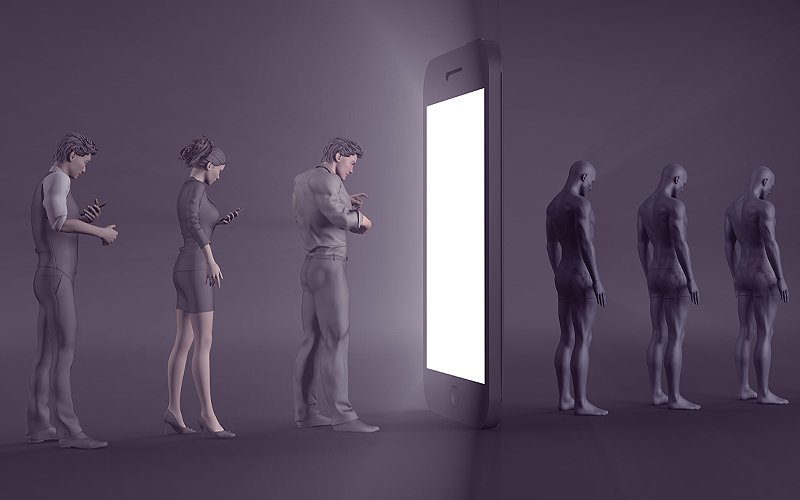
I’ve lost count of how many times I’ve been in a restaurant or public space and noticed everyone focused on a screen. Surrounded by people, yet completely disconnected. Even in the most beautiful settings, we often choose to record the moment instead of simply living it. Technology keeps advancing, but with each leap forward, something deeply human slips further away. We’re trading real experiences for virtual ones. Eye contact has been replaced by scrolling. Conversations, by notifications.
I often think back to my childhood, the days of beepers and pay phones. We played Manhunt, spin the bottle, and danced in the streets. We made memories the old-fashioned way, face-to-face, messy, and real. Now, when I talk to my son about those days, he listens, but his world is different. For him, socializing happens on Discord or in Minecraft and while I respect how digital spaces have evolved, I still urge him to go outside, meet people, and live unfiltered. I worry that we’re losing something vital: human connection!
Designing Tech That Puts People First
I admire organizations like the Center for Humane Technology. They advocate for a future where technology supports human well-being, not just profit. Their mission is to shift design away from addictive features and toward tools that nurture mental, emotional, and social health. As a graphic designer, I feel a responsibility to help build that future. The visuals and experiences we create shape how people engage with technology and each other. It’s time we embrace human-centered, ethical design guided by principles like:
- Respect autonomy – Design experiences that empower users with meaningful choices.
- Encourage mindfulness – Avoid addictive patterns and introduce friction that supports intentional use.
- Be transparent – Clearly communicate how products work and how data is used.
- Protect privacy – Collect only necessary data and give users control over it.
- Make tech accessible – Design for people of all abilities and backgrounds.
- Strengthen human connection – Use technology to enhance, not replace, face-to-face interactions.
- Avoid dark patterns – If signing up is easy, canceling should be too.
- Promote mental health – Prioritize well-being over endless engagement.
The Path Forward
Neuroscientist Richard J. Davidson said, “Our brains are like muscles, capable of developing strength or losing it if we don’t exercise enough.”
That stuck with me. Because the way we use and design technology is shaping the future of our minds, our relationships, and our humanity.
It’s not too late. Let’s design better. Let’s build a world where technology helps us connect—not disconnect.