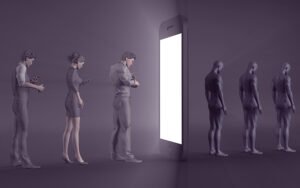
I challenged myself to go five days without watching TV and tracked how I spent my time using a daily log (see table below). At first, I felt weird, restless, and unsure of how to fill the void left by not watching my usual Netflix, Bravo and Amazon prime shows. I was very tempted to turn the TV back on and experienced some anxiety and FOMO (Fear of Missing Out). Watching TV has always been my way to wind down in the evenings, so breaking that habit wasn’t easy.
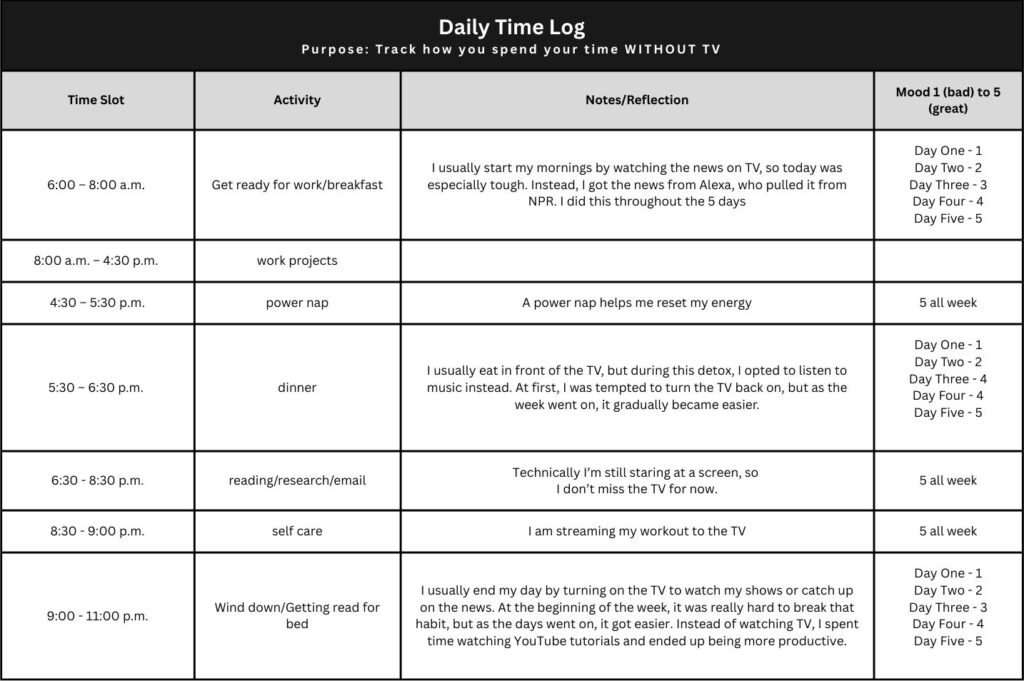
As the days passed, I found new ways to stay entertained. In the mornings, I asked Alexa to read me the news, which came from NPR. During dinner prep, I listened to music instead of sitting in front of the screen. The only time I used my TV was when i was doing my 30 minute workout nightly. I also found myself reading and doing research more often. I noticed that I was sleeping better and felt more productive overall.
My mood, tracked daily on a 1–5 scale, showed improvement over the five days. I became less moody and more adjusted as the days went on.
I came across an article by Sarah Bick titled “I Quit Watching TV Four Years Ago, Now My Life Has More Meaning”. She talked about how screens can put us in a kind of trance, and quitting helped her feel lighter, more creative, and more in control of her time. She described TV as a “vacuum” that swallows up hours without you noticing.
Another quote that stuck with me was from the book Stolen Focus by Johann Hari (page 128):
“Their business model is screen time, not life time.”
This quote reflects how platforms are intentionally designed to capture and keep our attention for profit.
I also asked friends and family if they’d ever done a digital detox. One friend said she quit Instagram but still used TikTok. She said it felt liberating. Others admitted they had tried but didn’t make it far. It made me realize just how deeply technology is embedded in our lives. It’s hard to imagine living like people did in the 1920s before TVs even existed. In today’s world, we are so used to the convenience and comfort of digital entertainment.
I also read an article by Michael D. Pollock, “How I Overcame TV Addiction”. He points out that watching six hours of TV a day adds up to 2,190 hours a year—that’s about 91 days, or three full months of your life, gone every year to watching TV. That really puts things into perspective.
Final Thoughts
The hardest part of this experiment was breaking the habit itself. But I’ve learned that moderation is key. Some TV is fine, especially for staying informed and entertained, but too much can easily become a time drain.
What I enjoyed most was how creative I became with my time. I was more productive, slept better, and felt more relaxed. This experience has inspired me to limit evening TV time and focus more on hobbies like resin and laser projects which could even lead to opening an Etsy shop. Watching TV won’t do that for me.